

Retro Replay: Soulcalibur II, the 20-Year-Old Fighting Game Is Still Better Than Most New Ones
Revisiting Soulcalibur II reminded me how effortlessly fun fighting games used to be
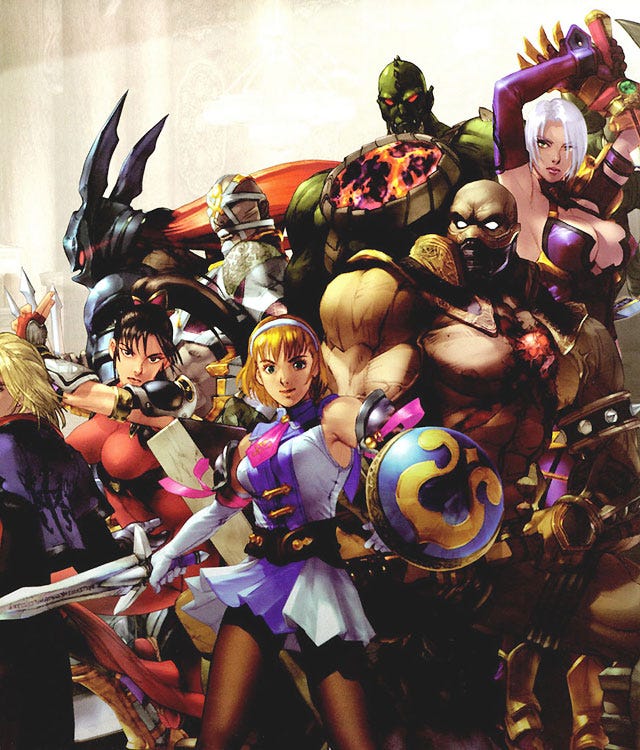
Going through my back catalogue I recently started playing Soulcalibur II and it made me realise how much I miss fighting games of the late 90s and early 2000’s.
It feels great to play, the combos link together like you’re gliding through air and the interesting characters keep you hooked while you dance around the screen unleashing barrages of special moves.
And that feeling? That’s not nostalgia doing all the heavy lifting. That’s Soulcalibur doing what it’s always done best: making you feel cool even when you’re only kind of good at it.
From arcade cabinets to console royalty
The wild thing about Soulcalibur is that it didn’t just appear out of nowhere swinging a sword. It evolved. The series started life as Soul Edge (or Soul Blade if you’re European like me) back in 1995. It was clunky by today’s standards, but the idea was already there: weapons-based fighting, real 3D movement, and a cast that looked like they’d escaped from a metal album cover.
Then Namco did the most Namco thing possible and said, “Okay, but what if we just… fixed everything?”
Enter Soulcalibur on the Dreamcast in 1998. This was the system seller. Crisp visuals, buttery smooth movement, and a control scheme that somehow made sense immediately. Eight-way run was a revelation at the time. Instead of feeling glued to a 2D plane, you could sidestep, circle, bait attacks, and actually think in three dimensions.
It wasn’t just flashy. It was readable. You could hand a controller to a friend, mash for five minutes, and still feel like you were doing something intentional. That accessibility is rare, even now.
Soulcalibur II: the peak (and yes, I will die on this hill)
Then we got Soulcalibur II, and honestly? This is where the series hit its absolute stride.
Every version had its own guest character, which was already cool, but the GameCube getting Link was borderline unfair. Fighting Nightmare as Link with a Master Sword and bombs felt like some kind of fever dream crossover, but it worked. Perfectly.
The roster was stacked. Mitsurugi, Ivy, Nightmare, Sophitia, Siegfried, Voldo (still unsettling, still iconic). Everyone had a distinct rhythm. Combos weren’t about memorising ten-page move lists, but about flow. You’d poke, step, punish, and suddenly you’re in this elegant back-and-forth that feels closer to fencing than button mashing.
It’s fast without being chaotic. Deep without being exhausting. And even today, it holds up frighteningly well.
The experimental years (for better and worse)
After that, things got… complicated.
Soulcalibur III leaned hard into single-player content with Chronicles of the Sword, which I loved, but the PS2 exclusivity and balance issues held it back competitively. Soulcalibur IV brought in Star Wars characters, which was either the coolest thing ever or completely immersion-breaking, depending on who you ask (I’m still torn).
Soulcalibur V tried to reboot the timeline, aged up the cast, removed fan favourites, and… yeah, that didn’t go over great. The gameplay was solid, but the soul (pun intended) wasn’t quite there.
Then Soulcalibur VI arrived and, credit where it’s due, it felt like a genuine course correction. A return to form (cough). Familiar faces, refined mechanics, and a respect for what made the series special in the first place. It reminded everyone that Soulcalibur still mattered.
But it also kind of… stopped.
Why Soulcalibur still deserves the spotlight
Here’s the thing: modern fighting games are incredible, but they’re also intimidating. Frame data, hyper-optimised combos, endless system mechanics layered on top of each other. That’s great for competitive depth, but it can be a brick wall for more casual players.
Soulcalibur has always been the bridge. Deep enough to master, welcoming enough to enjoy immediately. The weapon-based combat adds natural spacing and strategy. The movement feels expressive. You’re not just reacting—you’re dancing.
And visually? Swords. Armour. Ridiculous hairstyles. It’s timeless.
Which is why it genuinely bums me out that we haven’t seen more love for the series lately.
Remasters, remakes, or a full-on sequel—please?
If Namco Bandai announced a Soulcalibur II remaster tomorrow (Soulcalibur II HD Online for the Xbox 360 and PlayStation 3 no longer counts!) with online battles, modern resolutions, and a few quality-of-life tweaks, I’d be there day one. No hesitation. Same goes for a proper collection of the early games preserved and running flawlessly on modern hardware.
And if they’re feeling ambitious? A Soulcalibur VII that builds on VI, commits to the identity of the series, and doesn’t try to chase trends would be incredible.
No battle passes. No overcomplication. Just tight combat, great characters, and that unmistakable feeling that every match is a duel, not a spreadsheet.
Revisiting Soulcalibur II didn’t just remind me of how good those games were. It reminded me of a time when fighting games felt bold, stylish, and effortlessly fun.
And honestly? I really want that feeling back.